

German-French false friends: Gymnasium, Diele, Karton
Gymnasium is not a gym, Diele is not a slab, and the 't' in Cabriolet is pronounced in German. Here are 6 German-French false friends explained clearly, with nuances of usage and examples.
Gymnasium spelled like gymnase… but it’s a high school. Diele looks like a slab… but it’s the entrance. And the t in Cabriolet? In German, it is pronounced. These misleading similarities have made me smile more than once — and sometimes miss an entire sentence.
The most visible traps
Here are four very common false friends. Each resembles French, but shifts in meaning or usage in German.
- Gymnasium → general high school leading to the “Abitur.” Nothing to do with a gymnasium. Example: “Sie geht aufs Gymnasium.” For the sports building, we say Sporthalle. The orientation of the Gymnasium towards the Abitur is the standard usage in Germany according to the KMK.
- Diele → vestibule, entrance, reception hallway. Example: “Die Schuhe stehen in der Diele.” Another common meaning: wooden board (as in Dielenboden, plank flooring). You won’t see any “slab” there.
- Cabriolet → the convertible car, yes, but in German the final t is pronounced (unlike in French). Very common form: Cabrio. Example: “Er fährt ein Cabrio.”
- Karton → cardboard (the material) or a cardboard box. Example: “ein Karton voller Bücher.” In sports, you sometimes read “gelber Karton” for the yellow card — even if Gelbe Karte remains the standard form.
Tip
When a German word closely resembles French, check the meaning AND the collocations (typical verbs, prepositions). A dictionary like Duden helps clarify ambiguity.
The definitions and meanings above reflect the common usage of standard German according to Duden.
The nuances that irritate
Here, the resemblance does not lead to a total misunderstanding, but to a nuance that changes the sentence.
- Konkurrenz → competition (the rivals), not necessarily the "competition" as an event. Example: "Die Konkurrenz ist stark." For "to win a competition," we would rather say einen Wettbewerb gewinnen or den Wettkampf gewinnen. "Konkurrenz gewinnen" sounds awkward.
- Termin → appointment, fixed deadline (medical, professional, administrative). Example: "einen Termin vereinbaren." It is not "a term" in the lexical sense (rather Begriff) nor a "deadline" (rather Frist).
- brav → well-behaved, polite (especially for children: "ein braves Kind"). It has nothing to do with the meaning "courageous" that "brave" can have in French. For the German word for "courageous," think of tapfer or mutig.
My experience
At first, I translated Gymnasium as gym without thinking. Then I heard "aufs Gymnasium gehen" in a series and realized I was missing the entire meaning of the scene. The same with Termin: I thought "term" and wondered why everyone was "taking a term" at the doctor. Since then, I note tricky words with a real example sentence. This prevents me from memorizing a simple equivalent and forces me to anchor the usage: verb + preposition + context. It’s slower at the moment, but I find it easier in speaking.
How to train yourself
A good reflex: create your own cards with the German word, a short definition in French, and an authentic example sentence. If you want to do it neatly and review without forgetting, the module Vocabulaire de Discus allows you to create a personal glossary, synchronized across your devices, and the training algorithm adjusts the review order according to your mastery and the time elapsed. For example, add "Gymnasium → high school (towards Abitur)" with "Sie geht aufs Gymnasium"; or "Termin → appointment" with "einen Termin ausmachen."
Personal checklist
- Check if the word has changed its category (place vs. institution: Gymnasium).
- Note a strong collocation (Konkurrenz ist stark; Termin vereinbaren).
- Mark a pronunciation alert if necessary (Cabriolet: t is audible).
If you encounter another "false twin" (Figur vs "figure" in the sense of face, for example), add it to the same list. Three spaced revisions are often enough to defuse the trap permanently.
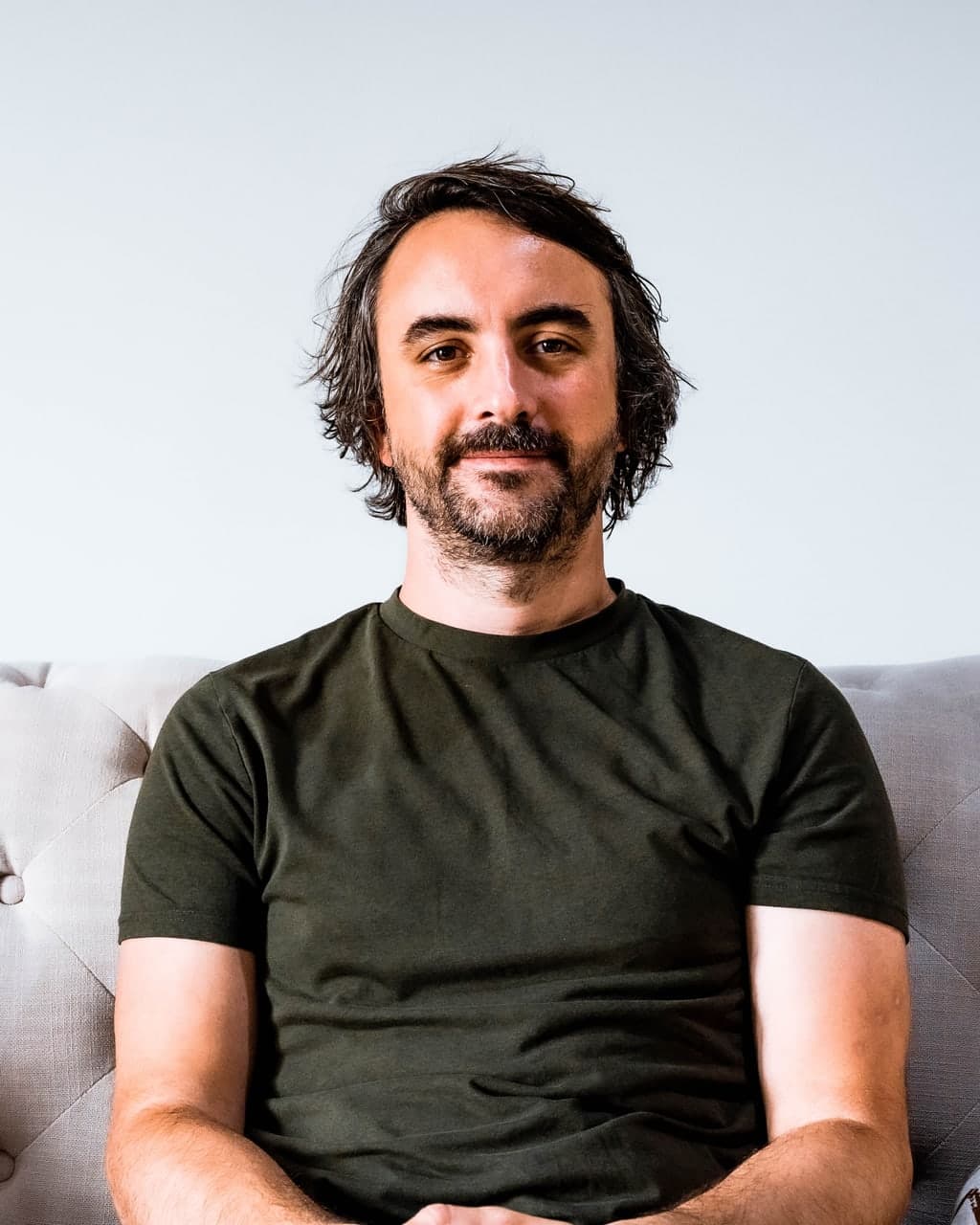
Amaury Lavoine
Article written by Amaury Lavoine, founder of Discus. He learns Swahili daily with a Kenyan teacher — it is this practice that guides every product decision.
About Discus →Related articles

faux-amis-italien-espagnol-burro-largo-oficina

German compound words: read from right to left
In German, the last element of a compound word carries the main meaning. Learn to segment, pronounce, and guess useful Komposita for everyday use.

Word order in German: V2 and subordinate clauses
Verb in 2nd position in main clauses, final verb with dass, weil, wenn: here are the essential diagrams of word order in German, with clear examples and pitfalls to avoid.